
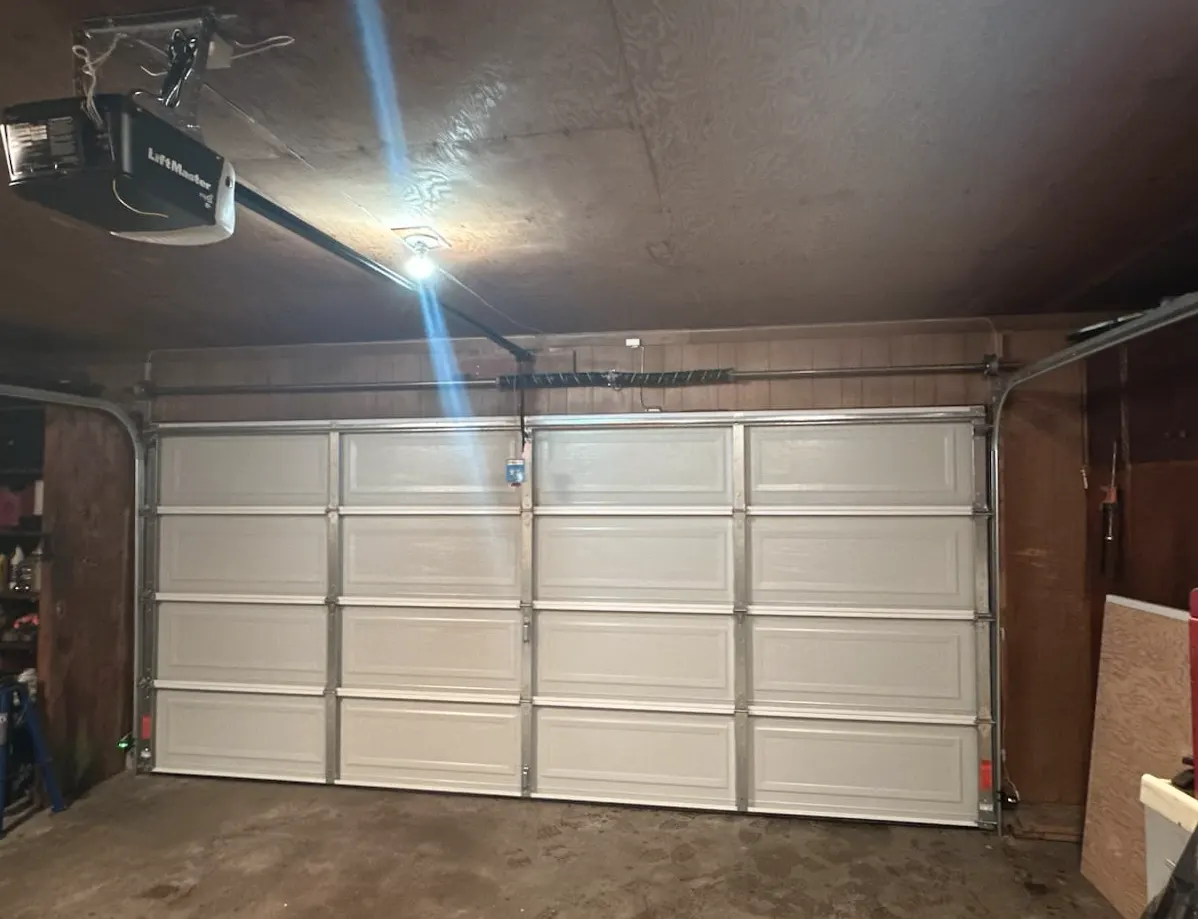
Put off this decision through one more Wisconsin winter and here's what usually happens: the opener that's been struggling since October finally quits during a January cold snap, on a Saturday, with your car trapped inside or your groceries stuck outside. By then you're not choosing between repair and replacement on your own schedule — you're paying for an emergency call and taking whatever opener is in stock. The cost of waiting isn't just inconvenience. It's losing control over the price and the timing.
It's Not Really "Repair or Replace" — It's Which Failure You're Looking At
Openers fail in pieces, not all at once, and the specific symptom tells you a lot about whether a repair will hold or whether you're just delaying the inevitable.
Signs a repair genuinely makes sense
- The remote or keypad has stopped working but the opener itself runs fine when you use the wall button
- A worn drive gear is making a grinding noise but the unit still lifts the door smoothly otherwise
- Safety sensors are misaligned or dirty, causing reversals
- The chain or belt has slipped off track but the motor and circuit board test fine
- The opener is under 8 years old and this is its first real issue
These are usually single-part failures on an otherwise healthy unit. A repair in the $150–$350 range (parts and labor, as a national ballpark) typically solves the problem and the opener goes back to being reliable for years.
Signs replacement is the smarter move
- The opener is 10–15+ years old and this is its second or third service call in a couple of years
- The motor strains, stalls, or trips the breaker, especially in cold weather
- You're seeing intermittent blinking error codes from the circuit board
- There's no battery backup, and you've lost garage access during a power outage before
- Replacement parts are hard to source because the model is discontinued
When several of these show up together, it means the whole unit is aging out, not just one component. Repairing it addresses this month's symptom while the next one is already forming.
The Cold-Weather Factor That Changes the Math Here
Deep cold is hard on motors and circuit boards generally, and openers that are already weak tend to show it first in winter — slow starts, straining on frozen tracks, or simply refusing to engage on the coldest mornings. Salt brine and road grime that get tracked into the garage all season also work into gears and sensor housings over time, accelerating wear on units that are already past their prime.
There's also a practical safety angle specific to this climate: winter storms here can knock out power for stretches, and a garage door with no battery backup becomes a door you can't open or close at all until power returns. Older openers almost never have this feature. Newer ones commonly do.
The Five-Year Cost Comparison, Laid Out Plainly
Path A — Repair the aging opener now: A repair today (say $200) buys time, but if the unit is already over a decade old, a second repair within a year or two ($200–$300 more) is common as other components reach the same age. Eventually the motor or board fails outright and you replace it anyway ($400–$700). Total over five years: often $800–$1,200, spread across multiple service calls and multiple days without a working door in between.
Path B — Replace now: A new standard opener runs roughly $350–$600 installed; a belt-drive model with battery backup and smart-home connectivity runs closer to $600–$900. Either way, it comes with a warranty, modern rolling-code security, and — critically for this area — battery backup that keeps working through a power outage. Total over five years: the install cost, plus routine maintenance, and little else.
The repair path isn't wrong for a younger opener with one isolated issue. But for a unit already in its second decade, repair-then-repair-then-replace almost always costs more than replacing once, and it does so while giving you worse reliability the whole time.
The Typical Recommendation for Homes Here
If your opener is under 8 years old: repair it. If it's 8–12 years old with a single, isolated issue: repair it and start budgeting for replacement in the next few years. If it's past 12 years old, or you've already had it serviced more than once recently, replace it now rather than feeding it another repair bill. The winter outage risk alone makes battery backup worth prioritizing for anyone relying on an attached garage as their main entry point.
When to Call Madison Overhead Door Co
If you're not sure which category your opener falls into, that's exactly what a service visit is for. Our techs can diagnose the specific failure, tell you honestly whether it's a repair or a sunset situation, and walk you through Garage Door Opener Service options or a full Garage Door Installation if replacement makes more sense for your unit's age and condition. We'll also check that your springs, cables, and tracks are in good shape before pairing them with a new opener motor, since an old opener often hides other wear that's worth addressing at the same time.
If your opener has been acting up, don't wait for a January morning to find out which way it fails. Call Madison Overhead Door Co, serving Madison, Middleton, Fitchburg, Sun Prairie, Verona, Waunakee, Oregon, and Monona, and get a straight answer before winter makes the decision for you.