
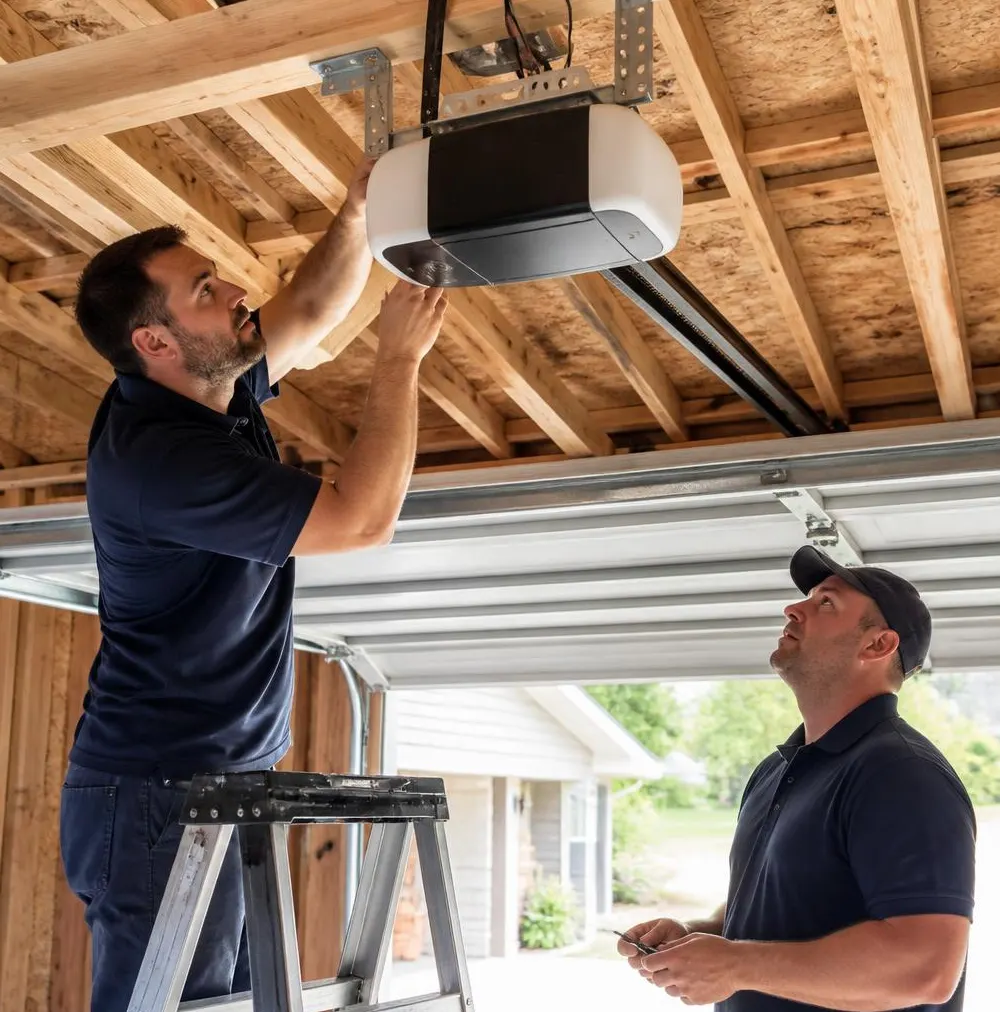
Short answer: the safety sensors and the spring setup are worth a hard look; the door panels, track, and even the opener motor are often fine to leave alone if they're working well. If your spouse wants to rip out a 30-year-old garage door system because it's "old," and you want to leave it because it's "not broken," you're both a little right. Age alone isn't the problem. The question is whether specific safety features were ever installed, and whether decades of Wisconsin winters have quietly worn down the parts that fail without warning.
What You Actually Need to Retrofit
A garage door built before the mid-1990s may predate some safety standards that are now considered basic. These are the things worth spending money on, even if nothing seems wrong yet.
- Photo-eye sensors. If your door has no small sensor eyes mounted a few inches off the floor on each side of the track, the door has no way of knowing if something (or someone) is in its path before it closes. This is the single most important retrofit on this list. It's a relatively small job to add a modern opener with sensors, or in some cases to add a sensor kit to an older opener.
- Auto-reverse function. Test this yourself: place a 2x4 flat on the ground where the door closes. If the door doesn't reverse on contact, that's not a quirk, that's a failed safety system. Doors without reliable auto-reverse should not be used until fixed.
- Spring containment. Older torsion springs were sometimes installed without a safety cable running through the center. If a spring under tension snaps without containment, it can whip violently and has caused real injuries. Containment cables are inexpensive insurance.
- Manual emergency release. Make sure the red release cord still works and disconnects the opener cleanly. In a power outage, this is how you get the door open by hand, and after a winter storm that knocks out power, you'll want this to actually function.
- Dedicated, grounded outlet for the opener. Older garages sometimes ran the opener off an extension cord or a shared circuit. That's a fire risk waiting to happen, especially with a motor working harder in cold weather.
What's Fine to Leave Alone
This is the part that usually settles the argument.
- Solid wood or steel panels with no rust-through or rot. If the panels are straight, the seams are tight, and there's no daylight showing through, an older door can keep doing its job for years. Replacing a cosmetically dated but structurally sound door is a style choice, not a safety one.
- Track that's properly aligned and free of major rust. Surface rust from road salt tracked in on vehicle tires is common and usually cosmetic. What matters is whether the track is bent, pulling away from the wall, or packed with corrosion that restricts movement. A straight, clean track doesn't need to be replaced just because it's old.
- A working opener motor, as long as it has (or can be fitted with) the safety features above. Chain-drive openers from decades ago are often louder but mechanically simple and durable. If it starts reliably, even in sub-zero cold, and the safety features check out, there's no need to replace it just for the sake of modernizing.
- Manual tension adjustments on older torsion springs, if done correctly. A properly maintained older spring system can still perform well. The spring itself has a finite lifespan measured in cycles, not years, so a door used lightly can outlast one used heavily, regardless of install date.
Why Wisconsin Weather Changes the Math
Deep cold makes metal more brittle and lubricant thicker, which is exactly when an aging torsion spring or a worn opener gear is most likely to fail. Road salt and slush splashed up from the driveway accelerate rust on tracks, hinges, and the bottom panel seam. Then spring thaw brings mud and moisture into the garage, which finds every weak spot in weatherstripping and worsens any corrosion that started over winter. An older door isn't doomed by this cycle, but it does mean a once-a-year inspection matters more here than it would in a milder climate.
A Quick Pre-Winter Checklist
- Test the auto-reverse with the 2x4 method
- Check for photo-eye sensors; if missing, prioritize adding them
- Look at the torsion spring for gaps, rust flaking, or a missing containment cable
- Lubricate rollers and hinges with a garage-door-specific lubricant, not household oil
- Confirm the manual release cord pulls freely
When to Call Madison Overhead Door Co
If your door fails the auto-reverse test, has no photo-eye sensors, or you can see a torsion spring with no safety cable running through it, stop using the opener and call us before winter sets in. Our Garage Door Opener Service can retrofit sensors and auto-reverse into most older setups without replacing a door that's otherwise in good shape. If the spring looks original or shows rust and gaps between coils, our Spring Replacement service handles that safely under controlled tension, which isn't a DIY job. For doors that are generally sound but haven't been looked at in years, a maintenance visit can confirm what's fine to leave alone and what's quietly become a liability.
If you're anywhere in Madison, Middleton, Fitchburg, Sun Prairie, Verona, Waunakee, Oregon, or Monona and you want a straight answer instead of a sales pitch, give Madison Overhead Door Co a call. We'll tell you honestly what needs fixing before the snow flies and what can wait.