
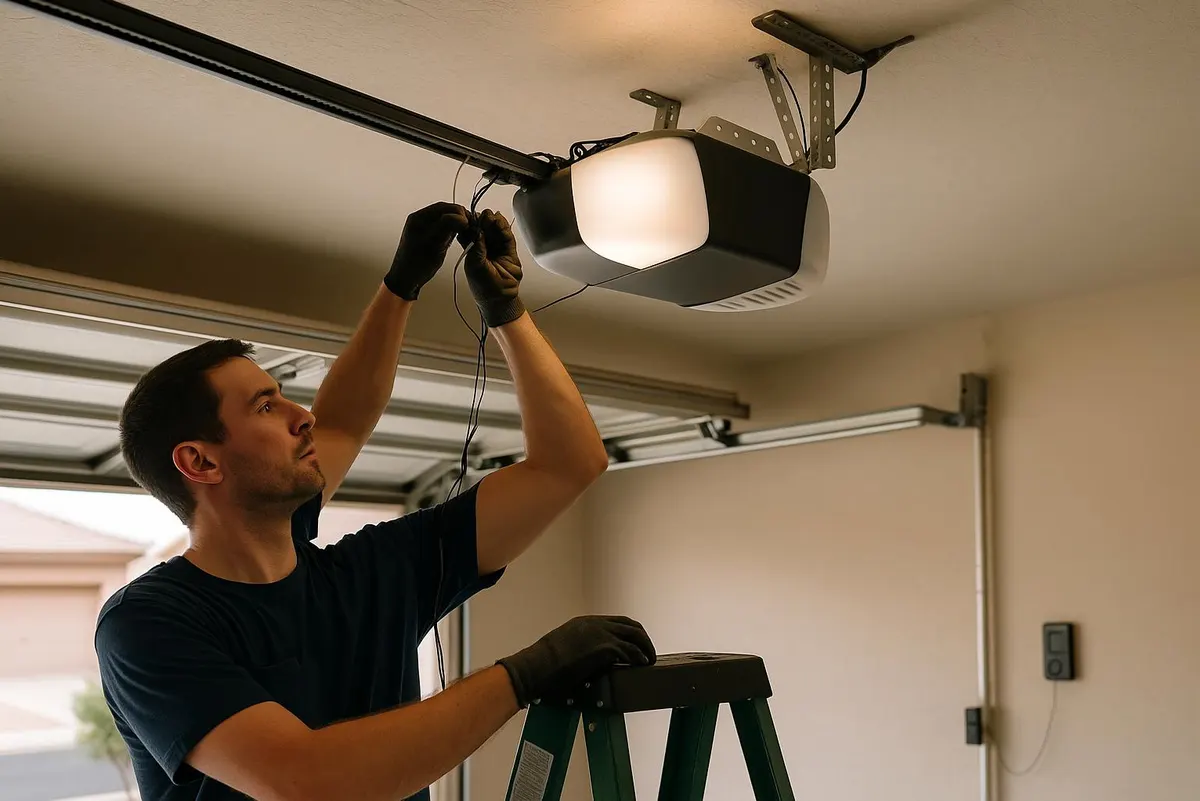
The Mistake Most People Make First
When homeowners suspect something's off with their garage door, the first thing almost everyone does is stand back and watch the opener run the door up and down. They listen for grinding, watch for wobble, maybe time how long it takes to close. It feels like a reasonable test — the door moves, the opener seems to be working, so it must be fine.
The problem is that this tells you almost nothing about balance. A garage door opener is strong enough to drag a poorly balanced door through its full cycle even when the springs are badly worn. You won't see the struggle because the motor is doing the compensating for you. The real test has nothing to do with the opener at all — it's about what the door does on its own, with no power involved.
Why Balance Matters More Than It Looks Like It Should
Garage door springs are sized to counterweight the door so it takes only a few pounds of hand pressure to lift or lower it. When the springs weaken, over-tighten, or wear unevenly — which happens gradually over years of cycles and is accelerated by Wisconsin's temperature swings — the opener has to make up the difference every single time it runs.
That extra load doesn't stay contained to one part. It shows up as:
- A hotter-running motor that draws more current on every cycle and wears out sooner than it should
- Stripped internal gears inside the opener head, which are usually plastic and not built to carry spring load
- A stretched or skipping drive belt or chain from the added strain
- A bent trolley arm or loosened header bracket as the opener fights an uneven load
- Homeowners cranking up the force setting to compensate, which can defeat the safety reversal system that's supposed to stop the door on an obstruction
In other words, an unbalanced door doesn't just mean weak springs — it means you're slowly burning out an opener to cover for them, and in the worst case you're disabling a safety feature without realizing it.
Tools You'll Need
- Step ladder
- Work gloves
- Flashlight
- A second person to help, especially on heavier wood or insulated steel doors
How to Test Garage Door Balance Yourself
- Close the door completely. Start from a fully closed position so you have a clean baseline.
- Find the manual release cord. It's the red-handled cord hanging from the trolley on the opener rail.
- Pull the release cord to disconnect the opener. The door is now in manual mode and isn't being helped or hindered by the motor.
- Lift the door by hand, slowly, to about waist height. Pay attention to how much effort it takes.
- Let go and watch what happens. A balanced door stays roughly in place or drifts down slowly. An unbalanced door will either drop fast on its own or shoot upward.
- Repeat the test at a few points — quarter open, half open, three-quarter open. Springs can be balanced at one point in the travel and off at another, especially as wear sets in unevenly.
- Watch for binding or drag on one side while you're at it. A door that leans or sticks to one track isn't a spring problem, it's a track or roller problem, but it will throw off your balance test if you don't account for it.
- Reconnect the opener by pulling the release cord again, or by running the door through a full cycle until the trolley re-engages with a click.
Keep gloves on and keep your hands clear of the panel joints as the door moves — those seams can pinch fingers, especially on older doors.
What a Homeowner Should Do — and What's a Technician's Job
Running the manual lift test above, watching for drift versus drop versus shoot-up, and doing a visual check of the spring coils for visible gaps, rust, or stretching — all of that is safe, useful homeowner work.
What's not a DIY job is anything that involves adjusting spring tension. Torsion springs store a serious amount of energy under tension, and loosening or tightening them requires winding bars and technique that aren't safe to improvise. The same goes for replacing extension springs, adjusting opener force and limit settings after a spring repair, and replacing worn cables or pulleys. If your test shows the door is out of balance, that's the point to stop and call it in rather than reach for a wrench.
A Seasonal Note for This Area
Heading into a Wisconsin winter is a good time to run this test. Cold snaps stiffen steel springs slightly and thicken old grease on tracks and hinges, which can make a borderline-balanced door tip over into noticeably unbalanced right when you need it working reliably every day. Catching it now, before deep cold and road salt season sets in, is easier than troubleshooting a door that's fighting you during a January storm.
When to Call Madison Overhead Door Co
If your door drops fast, shoots up, or feels uneven at different points in the test, that's a job for our Spring Replacement service — we'll confirm the spring wire gauge and cycle wear, install a matched set rather than a mismatched single spring, and retest before we leave. If the springs check out balanced but the opener still seems to be working hard, that points to the opener itself, and our Garage Door Opener Service covers force and limit adjustments, gear inspection, and belt or chain tensioning. Either way, we're on Watts Road and serve homeowners across Madison, Middleton, Fitchburg, Sun Prairie, Verona, Waunakee, Oregon, and Monona.
Call Madison Overhead Door Co before winter settles in — we'll test the balance, check the opener, and make sure your door is ready for the cold.